Blog

 RSS Feed

  1. The Russian-Ukrainian team of the project: ‘Psychological Support for Victims of War in Ukraine’, consisting of a married couple of doctors, Russian political immigrants Alexander and Galina Goncharenko and Ukrainian psychologists, conducted another psychological training seminar with Ukrainian women in Germany.

    The aim of the workshops is to help Ukrainian women overcome post-traumatic stress disorder (PTSD) and refugee adjustment syndrome.

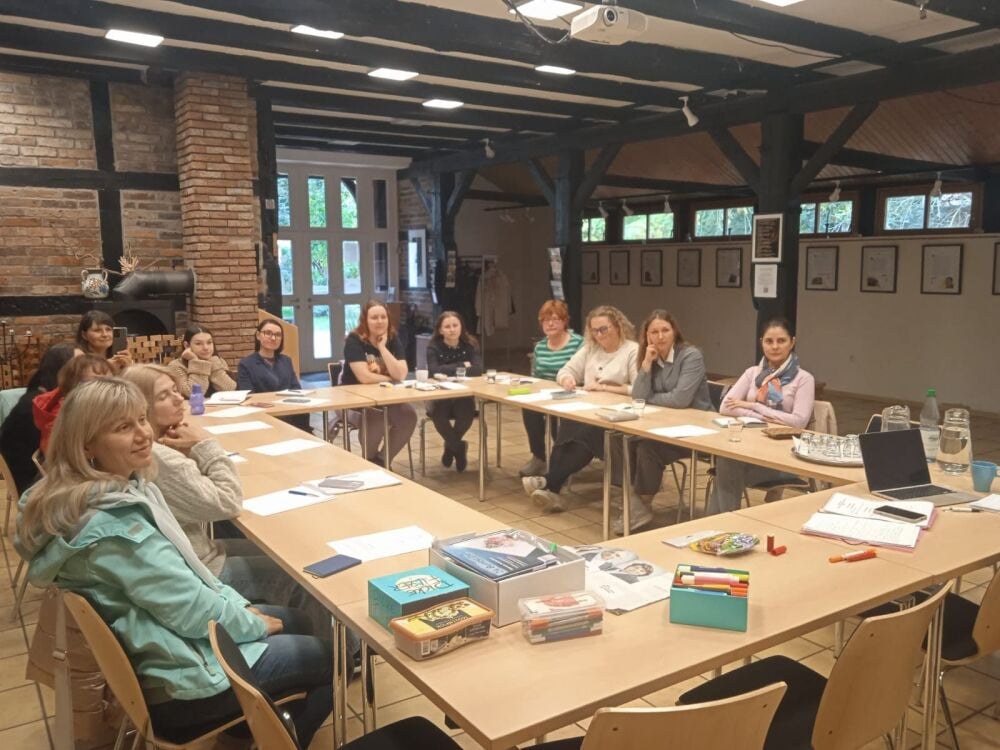
    The next seminar, as well as the previous ones, was held in Hamburg on 29 - 30 March 2025 on the basis of the ASB Foundation ‘Samaritan Workers’ of Germany.

    The seminar was attended by women from Zhytomyr, Odessa, Zaporizhzhya, Luhansk, Lviv, Kyiv, Dnipropetrovsk and Donetsk oblasts who had fled the so-called special military operation (SMO) of the Russian armed forces in Ukraine to Germany.

    The workshop was conducted by Natalia Stepanenko, a psychologist from Chernihiv, who successfully combined the presentation of theoretical knowledge with practical skills. On the first day of the seminar, which is more difficult in moral and psychological terms, the women shared their personal stories.

    Click on the link to read the video story told by Nadezhda Nikishina.

    Unfortunately, this is in many ways a typical life story in the current atypical time in modern Europe, which the project team members heard from Ukrainian refugees during the nine workshops.

    On Saturday and Sunday, the participants learnt about the concepts of feelings, emotions, anxiety, fear, self-esteem, ‘anchors’, the pyramid of needs and ways of finding inner resources.

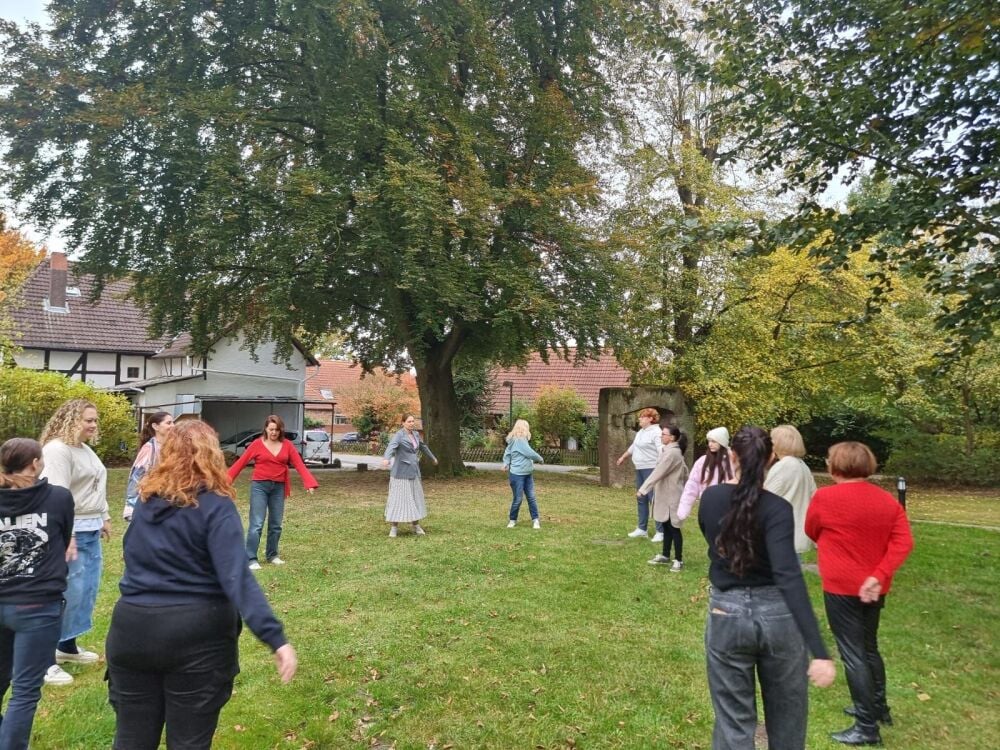
    In addition, under the guidance of a psychologist, the women learnt various psychological exercises and meditation practices.

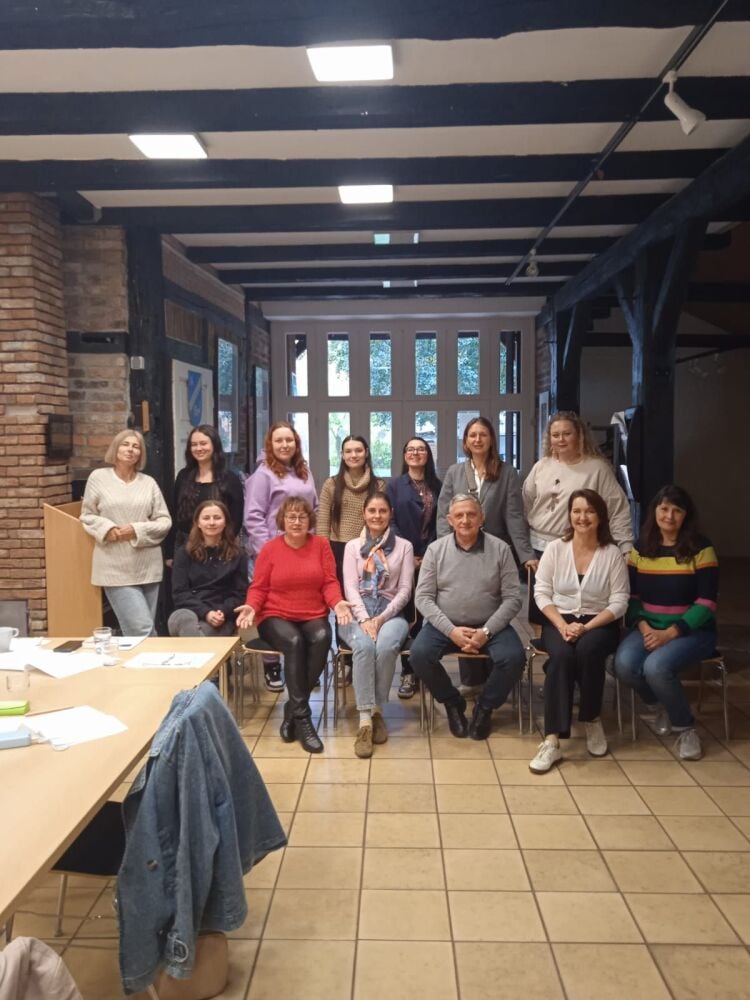
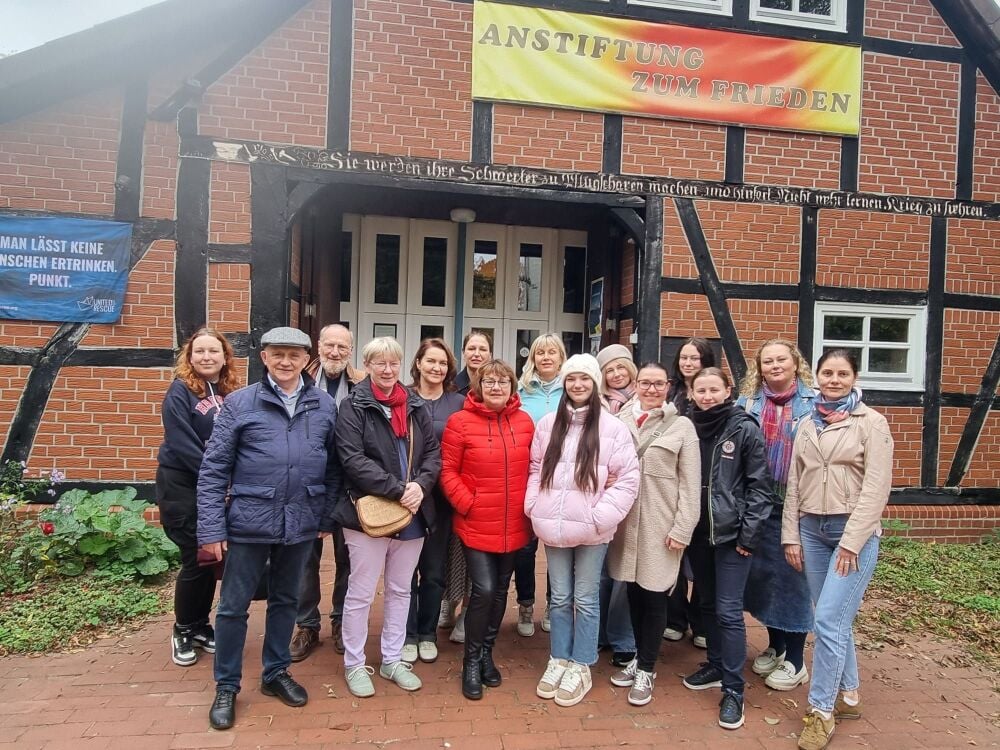
    It has already become a tradition at seminars-trainings not only to take a collective photo, but also to summarise the results at the end of the event.

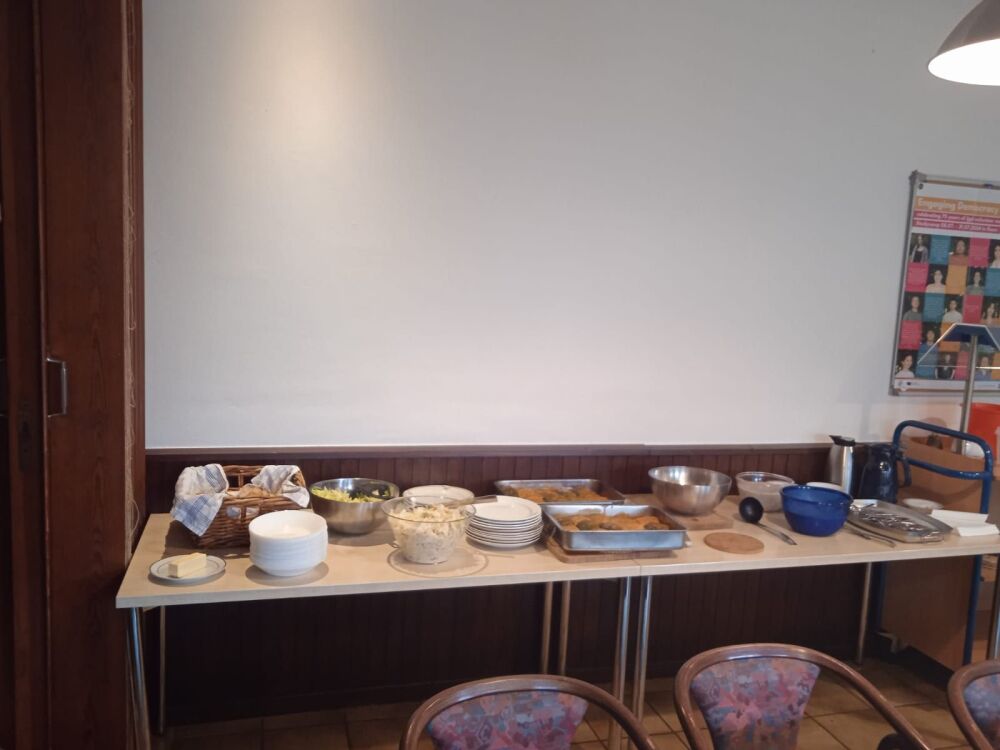
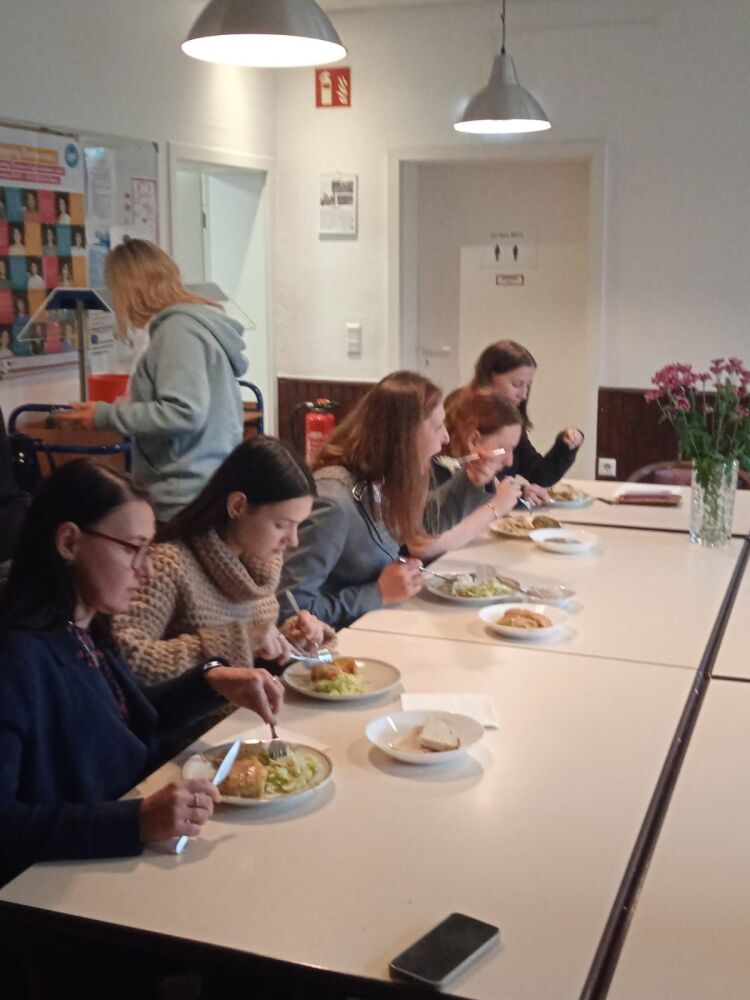
     Many warm and heartfelt words were said by the participants not only to the project organisers and the psychologist, but also to the organisation that provided the premises and delicious lunches with Ukrainian cuisine.

    The event was financially sponsored by the Sebastian Kobler Foundation (Sebastian Cobler –Stiftung )    and the Hamburg branch of the German Samaritan Workers Foundation (Arbeiter-Samariter-Bund, Mitte ).

    At the end of the event, Alexander Goncharenko, on behalf of the project team and the seminar participants, thanked the sponsors of the seminar and the Managing Director of the Hamburg Foundation for Politically Persecuted Persons   , Martina Baeurle, for their assistance to the project.

    All the participants of the seminar joined a group on WhatsApp: ‘Psychological help for victims of war in Ukraine’, where they will continue their further communication.


    Photo 1. Collective photo of the ninth seminar-training;

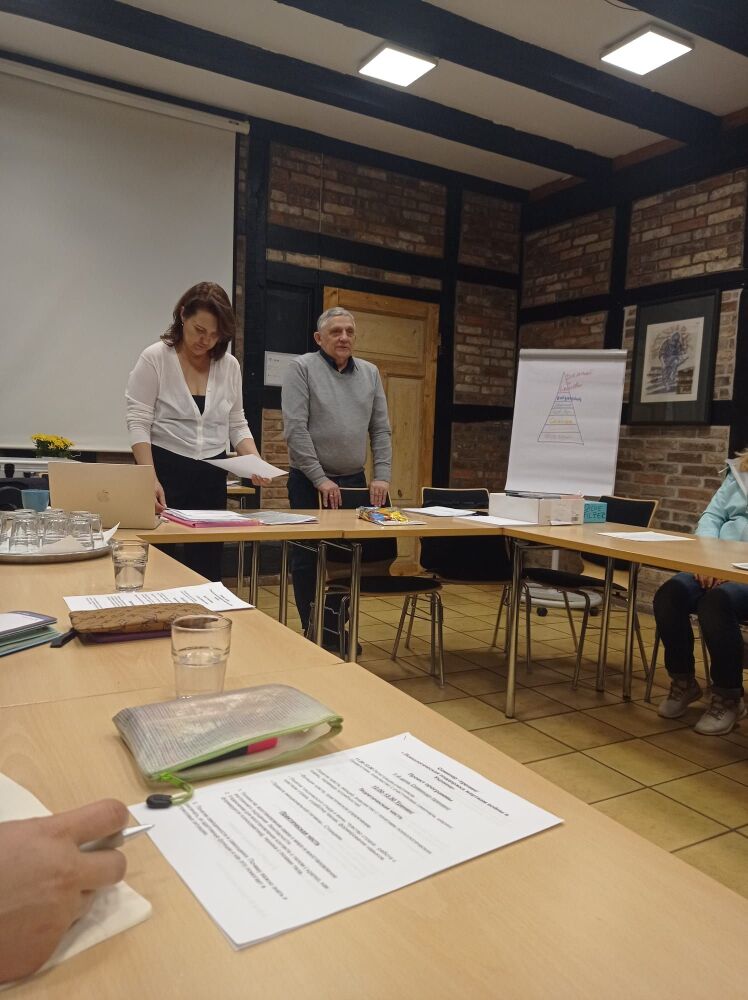
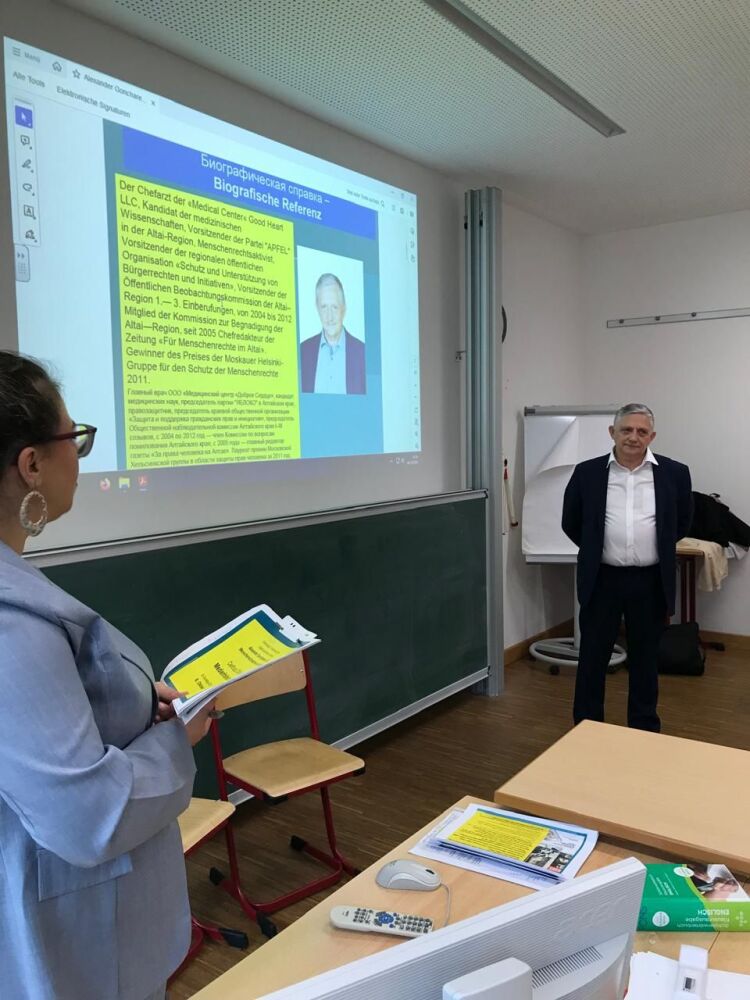
    Photo 2. Oleksandr Goncharenko with an introductory speech before the beginning of the seminar;

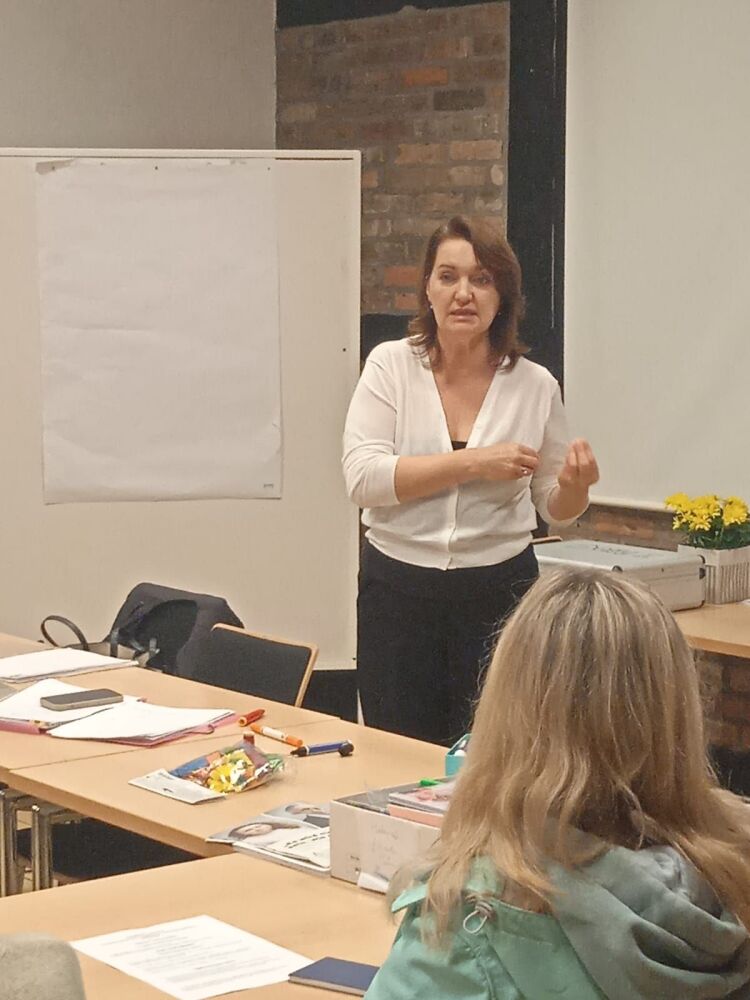
    Photo 3-4. Psychologist Natalia Stepanenko at work;

    Photo 5-6. At the lunch table on the first and second day;

    Photo 7. Exercise ‘round dance’;

    Photo 8. Exercise ‘hands to the sun’;

    Photo 9. Exercise with a hand;

    Photo 10. Work in pairs;

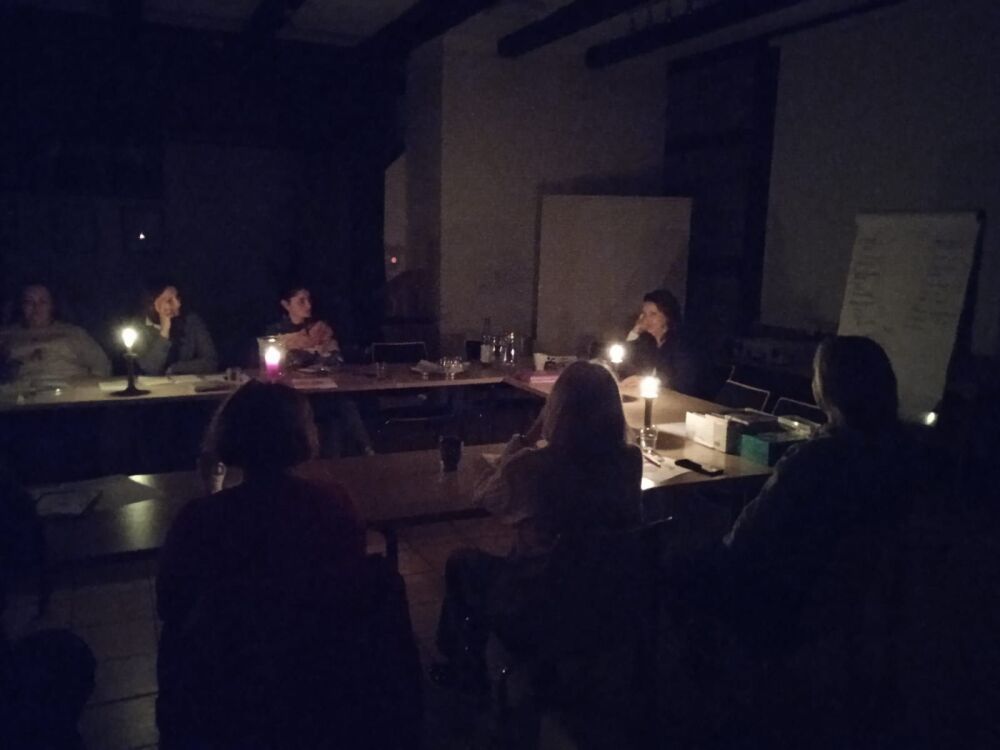
    Photo 11. Deep meditation.c016a43a-d25c-4a2c-840c-237b67853d5ad6a Александр Гончаренкоe8 Психолог Степаненкоe8 Психолог Степаненко 238 в первый день обедbda во второй день обед95 методика хоровод41 руки к солнцу47 упражнение с рукой04f работа в парах7a0 глубокая медитация

  2. Last Sunday (16.02.2025), a rally ‘Never Give Up’ was held in the centre of Hamburg.

    The action was timed to coincide with the anniversary of the death of Russian opposition politician Alexei Navalny in a Russian prison.

    The participants of the action held in their hands not only a portrait of Alexei Navalny, but also other victims of repression by the Russian authorities. During the event, FAS Hamburg coordinator Lyubov Zakharova told sad stories about some of the many victims of the Putin regime's repression.

    Indifferent citizens brought not only portraits of repression victims to the event, but also posters, fresh flowers and candles.

    After the speakers' speeches, there was a free microphone at the event and anyone could share their memories and experiences.

    All speeches were not only in Russian, but also duplicated in German for the convenience of German friends.

    Sound-amplifying equipment allowed to enjoy music performed by pianist Pavel Kushnir, who as a political prisoner died during a hunger strike at the age of 39 in the detention centre of Birobidzhan on 27 July 2024.

    Despite the windy and chilly weather, Sunday afternoon the action was attended by about one hundred people, including myself and my wife Galina. The event was organised by Antiwar Hamburg and FAS Hamburg (Feminist Antiwar Resistance Hamburg).

    The organisers of the action invited me to be one of the speakers.

    Below I publish the text of my speech:

    ‘Dear compatriots, dear German friends! We have gathered here today to honour the memory of Alexei Navalny and other victims of the Russian authorities, to support Russian political prisoners in Putin's gulag.

    The great German writer, intellectual and anti-fascist Thomas Mann said of Hitler: ‘A raving, uncouth plebeian’.

    Today, these words can be safely used to characterise Putin. Putin's calculation to let his worst enemy and personal prisoner Alexei Navalny live was a big mistake.

    The whole story of Navalny's return to Russia is like a deja vu reminiscent of the Chekist operations ‘Trust’ and ‘Syndicate-2’ to lure leaders of white emigration to Soviet Russia.

    Today in Russia the power is in the hands of the successors of the VChK, the FSB.

    Stalin's terror in the country has been replaced by Putin's terror.

    According to OVD-info, more than 3,000 people are currently involved in politically motivated criminal cases in Russia, of whom almost 1,500 are in prison.

    I would like to take this opportunity to express my words of support to all political prisoners and personally:

    My Yabloko colleagues: Mikhail Afanasyev from Khakassia, Vladimir Efimov from Kamchatka, Konstantin Smirnov from Ryazan, and Vasily Neustroyev from St. Petersburg.

    Soviet dissident and Russian anti-Nazi activist Alexander Skobov.

    Nadezhda Buyanova, sentenced to 5.5 years on the denunciation of a patient. Nadezhda and I are colleagues, paediatricians.

    To my fellow countrymen from Altai:

     - Sergei Mikhailov, founder of the weekly Listok, and Maria Ponomarenko, a journalist from Barnaul. Sentenced to 8 and 6 years in prison;

    - Vitaly Pirogov, Nikolay Tsymbaliuk, Andrey Vitovtov, Anatoly Lipkovsky, Sergey Sviridov, sentenced to 4 to 18 years in prison for allegedly calling for terrorism on the Internet;

     - Major Mikhail Zhilin, who refused to go to war, sentenced by a Barnaul military court to 6.5 years in a penal colony;

    - young Danil Yakovlev from the town of Biysk, Altai Territory, who received a 15-year prison sentence for donating 50 euros to the Ukrainian armed forces.

    I am very happy for my fellow countryman, Navalny's associate Vadim Ostanin, who did not have to spend all nine years in prison. Vadim was lucky, he was exchanged on 1 August 2024.

    To exchange all Russian political prisoners for Putin's spies and murderers, there won't be enough «krasikovs».

    I am against the idea of exchanging political prisoners for sanctions. Now Trump is preparing a deal with Putin, where we are talking, among other things, about sanctions.

    Something tells me that Trump is unlikely to bring up Russian political prisoners.

    Unfortunately, the wrong personality!

    But I have a concrete proposal for the release of Russian political prisoners. There are many collaborators in Ukrainian prisons who could be exchanged for Russian political prisoners with the assistance of EU leaders.

    Earlier, Ukrainian President Volodymyr Zelensky spoke favourably about this initiative.

    I think that if all leaders of the Russian emigration, instead of ‘fighting’ with each other, work in this direction, it may be possible to help release at least some of the Russian political prisoners.

    Let us all say together as loudly as possible:

    NO TO WAR!

    FREEDOM FOR ALL POLITICAL PRISONERS!


    Alexander Goncharenko, doctor, human rights defender, Russian political emigrant873028f1-94b6-415a-9b75-2f44e8cd76ef8959c4cf-a583-4d9f-b19f-10807b9fbe4c2f9c8d89-4f25-4428-b7f9-bc29305a2f376522c910-c48e-4338-87cf-d8173d1de5bf79c6c0d2-8976-4c0f-a775-516d3148f52841493ddd-0d7d-44ec-b617-badb66c91780